


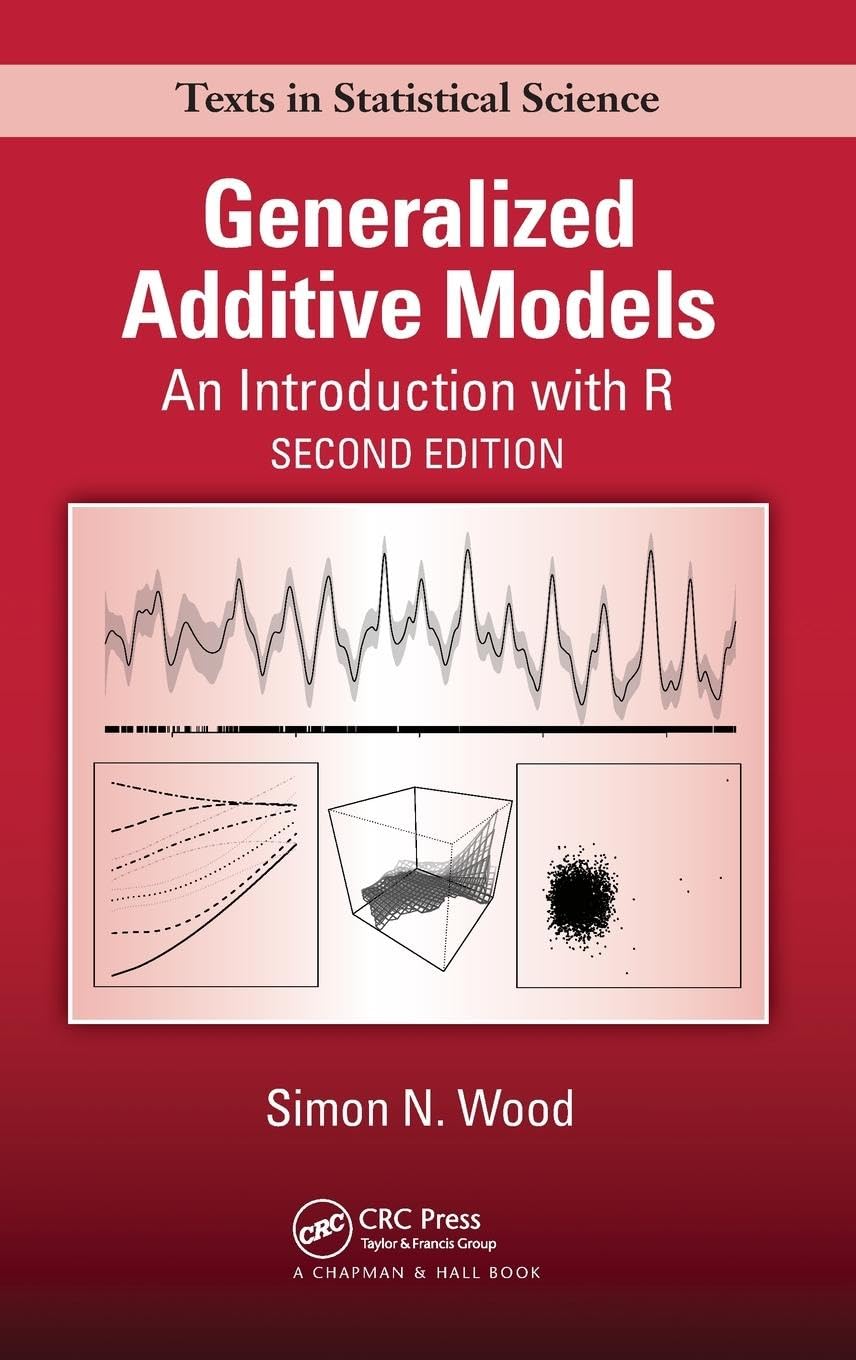



If you're diving into the world of non-linear statistical modeling, the second edition of 'Generalized Additive Models: An Introduction with R' is a must-have. The book brilliantly bridges theory and practice, offering clear explanations alongside practical R examples. What stands out is how the author, Simon Wood, restructured this edition to be more readable than its predecessor.
The inclusion of new topics like adaptive smoothing and location-scale modeling is a game-changer, especially for handling non-uniformly sampled data. The expanded discussion on different distribution families, including exponential and Cox proportional hazards, adds depth to an already comprehensive guide.
However, it's not all perfect. The removal of Table 5.1 from the first edition is a puzzling choice—it was a handy reference for smoothing bases. Also, while the book aims to be practical, some sections assume a high level of mathematical proficiency, particularly in linear algebra. This might be daunting for beginners.
On the flip side, if you've got a solid background in GLMs and Bayesian inference, this book will feel like gold. The code examples are robust, covering everything from manual model programming to using R packages like mgcv and lme4. Plus, the Bayesian perspective sprinkled throughout adds another layer of usefulness.
One minor gripe: the first few chapters can feel unnecessarily convoluted with their focus on QR decompositions. It’s like being forced to take the scenic route when you just want to get to the destination. But push through—the later chapters make up for it with their clarity and practical insights.
Overall? If you're serious about GAMs, this book is worth every penny—just brace yourself for a steep learning curve in places.
 Report
 Share to...


