


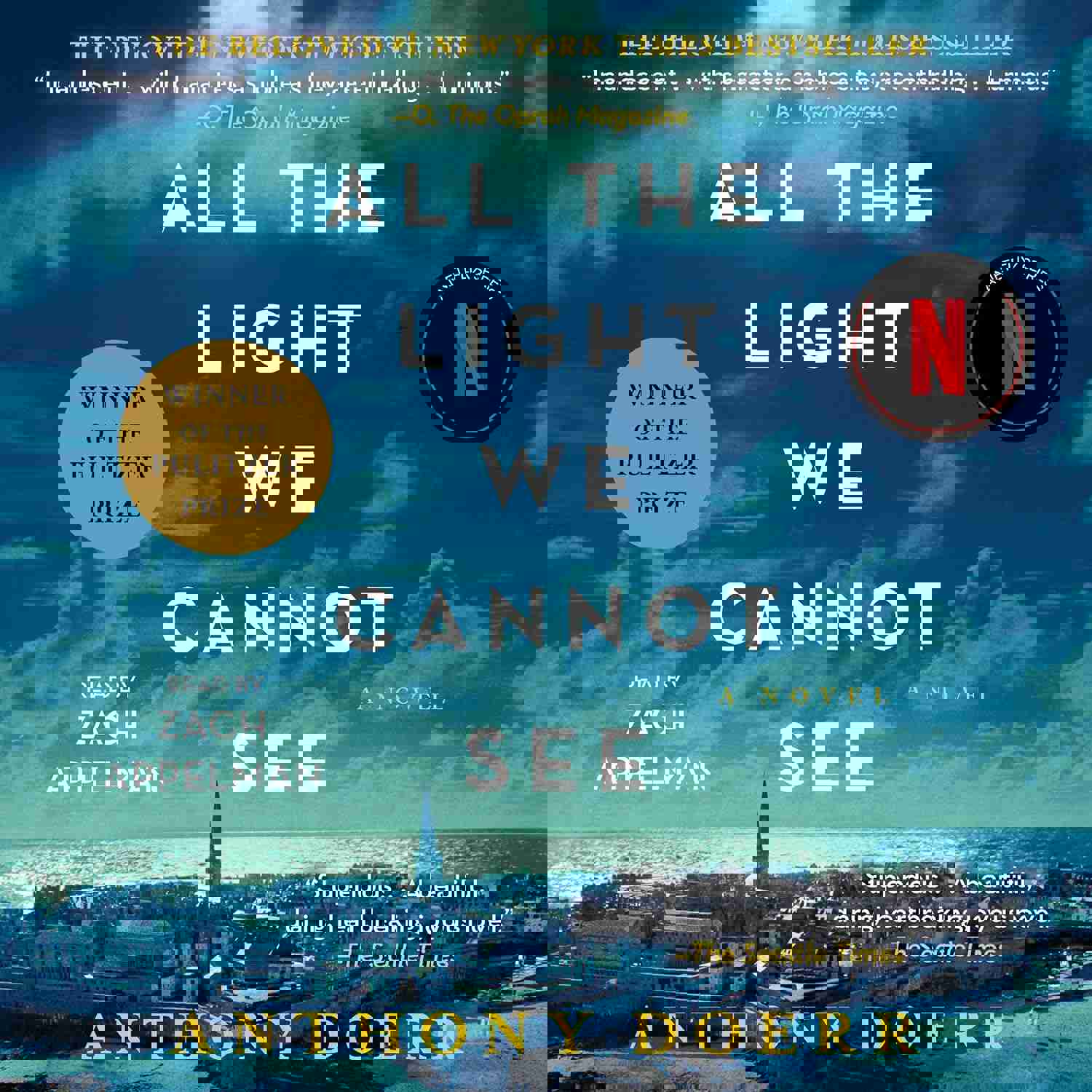



I picked up 'All the Light We Cannot See' with high expectations, and it didn't just meet them—it soared past. From the first page, Anthony Doerr's writing wrapped around me like a warm blanket on a cold night, vivid and comforting yet deeply moving.
The way Doerr paints Marie-Laure's world, despite her blindness, is nothing short of magical. I found myself closing my eyes, trying to experience the world as she does—through sounds, smells, and textures. It's a perspective I'd never considered before, and it changed how I see things, literally.
Werner's story, on the other hand, broke my heart in the best way. His internal struggle between survival and morality felt so real, so human. There were moments I had to put the book down just to process the weight of his decisions.
What truly amazed me was how these two lives, seemingly worlds apart, intertwined. The anticipation built with each chapter, and when their paths finally crossed, it was like watching two stars collide—beautiful, inevitable, and devastating all at once.
I listened to the audiobook version narrated by Zach Appelman during my commute, and his performance added another layer of depth. His pronunciation of French and German words, the emotion in his voice—it transported me straight to wartime Europe.
This isn't just another World War II novel. It's a masterpiece that explores light in all its forms—the visible and invisible, the literal and metaphorical. Months after finishing it, certain scenes still pop into my mind unexpectedly, like flashes of that very light the title speaks of.
 Report
 Share to...


